The Fabric
of Ahimsa
Born from an ancient tradition that lets the silkworm live and fly free, Eri Silk is more than a textile — it is a philosophy of non-violence woven into every thread.
A Silk That Lets Life Flourish
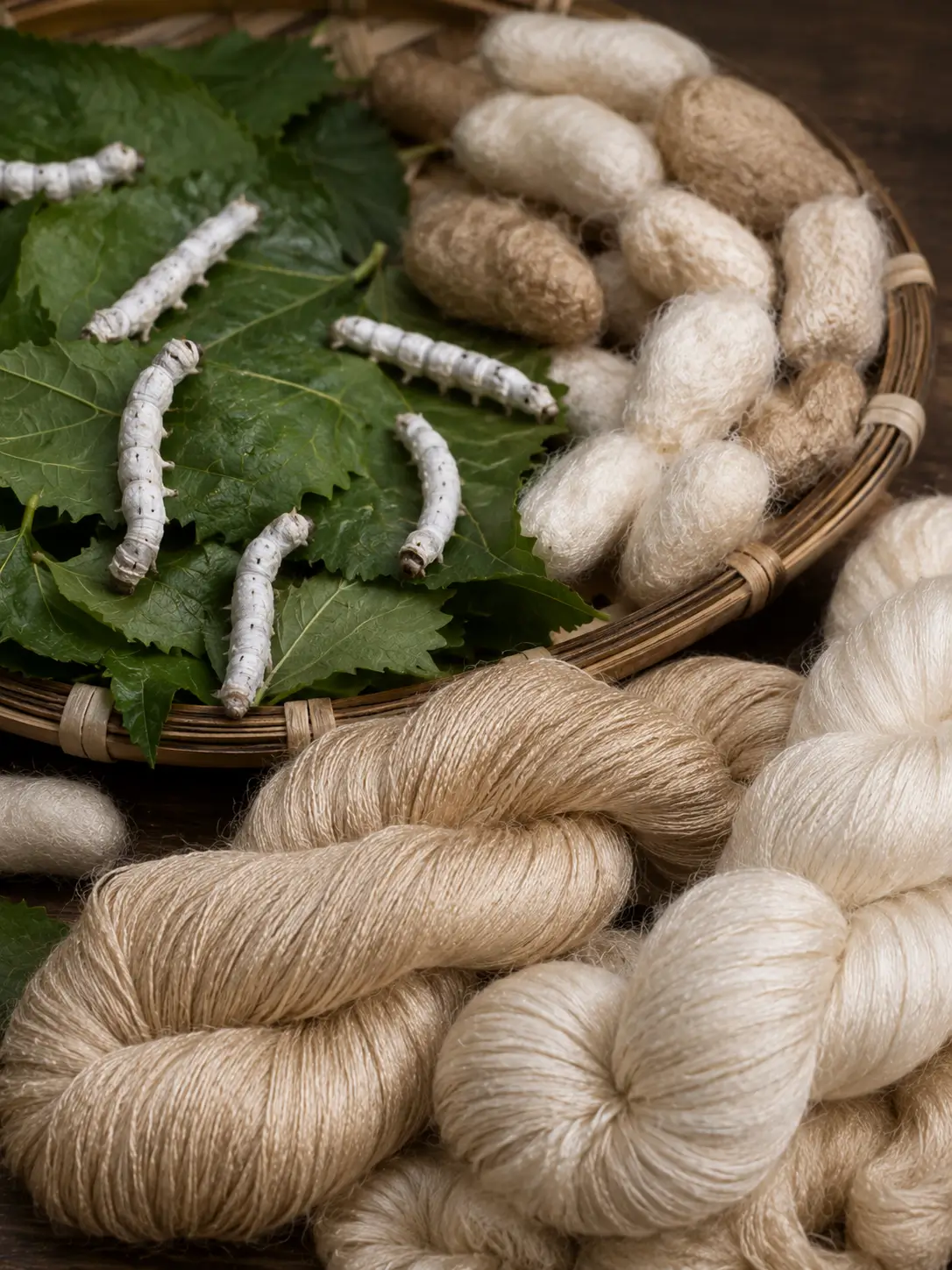
Eri Silk — also known as Ahimsa Silk, or the "Silk of Peace" — is the only variety of silk in the world produced without killing the silkworm. Spun from the cocoons of Samia ricini, a silkworm that feeds exclusively on castor and kesseru leaves, Eri is a product of an extraordinary alignment between human craft and natural ecology.
Unlike conventional silk, where cocoons are boiled to extract continuous threads — destroying the chrysalis within — the Eri process allows the moth to complete its metamorphosis, emerge freely, and live its full life. The broken, open-ended cocoon fibres that remain are then spun by hand into a uniquely textured, warm, breathable yarn that carries centuries of Bodo wisdom in every strand.
Farm to Fabric — The Ancient Journey
What makes Eri Silk singular is not just its non-violence — it is the complete, unbroken chain from leaf to loom that has remained virtually unchanged across two thousand years of Bodo civilisation.
Properties That Make It Extraordinary
Beyond its ethical origins, Eri Silk possesses a rare combination of functional and aesthetic qualities that position it as one of the world's most versatile and premium natural fibres.
Thermal Regulation
Naturally warm in winter and cool in summer, Eri Silk acts as a year-round insulating fabric — often called the "thermal silk" of the North East.
Hypoallergenic
Free from synthetic treatments and chemical dyes by default, Eri is gentle on even the most sensitive skin — ideal for babies, allergy sufferers, and medical use.
Moisture Wicking
Its naturally porous fibre structure absorbs and releases moisture efficiently, keeping the wearer dry and comfortable throughout the day.
Cottony Texture
Unlike the smooth sheen of mulberry silk, Eri has a soft, matte, cotton-like texture — easier to blend with other fibres and deeply wearable in everyday contexts.
Fully Biodegradable
Produced without synthetics and processed without toxic fixatives, Eri Silk returns to the earth cleanly at the end of its life — a truly circular material.
Durable Strength
Despite its fine, cottony feel, Eri Silk is exceptionally strong and resilient — garments woven by Bodo artisans often last for decades with proper care.
"In a world where fashion has forgotten what it costs to make beautiful things, Eri Silk remembers — and it remembers with compassion."
The Eri Silk Festival — Bodoland, Assam
A Protected Heritage
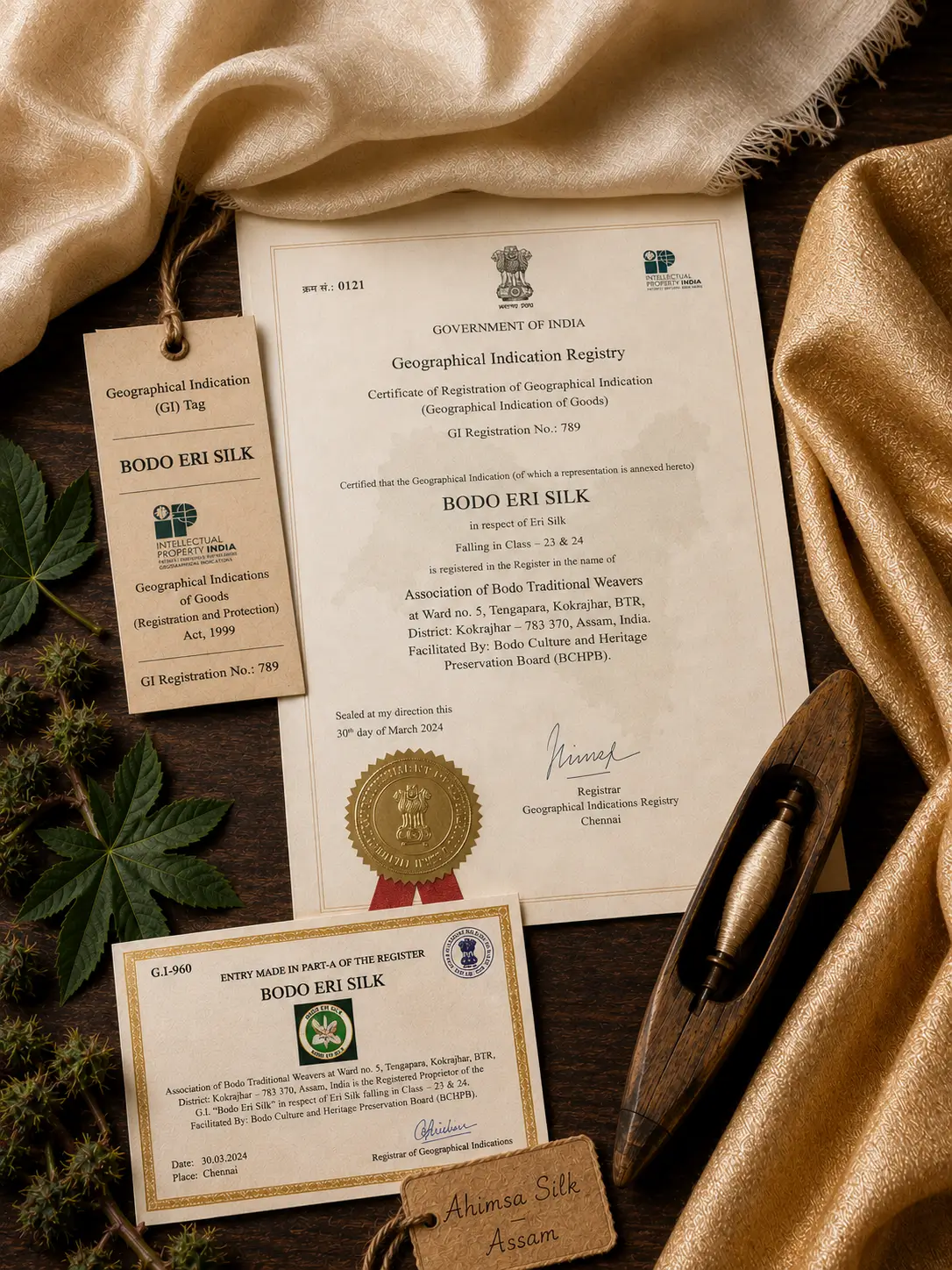
Bodo Eri Silk holds a Geographical Indication tag (GI No. 960) issued by the Government of India — a legal certification that authenticates its origin and protects it from imitation. Only Eri Silk produced within the designated regions of Assam can legally carry this designation.
This GI tag is more than a quality mark. It is a legal shield for the Bodo weavers, a guarantee of authenticity for the consumer, and a recognition of two millennia of indigenous knowledge that belongs exclusively to this land and its people.
When you purchase a GI-tagged Eri Silk product, you are not merely buying fabric — you are investing in a protected cultural legacy.
Experience Eri Silk Firsthand
See the silkworms. Touch the looms. Wear the fabric. Meet the weavers. The Eri Silk Festival is the only place in the world where you can experience the complete story of Ahimsa Silk — live, in the land where it was born.